Matcha Basics
How to Store Matcha So It Doesn't Taste Like Hay
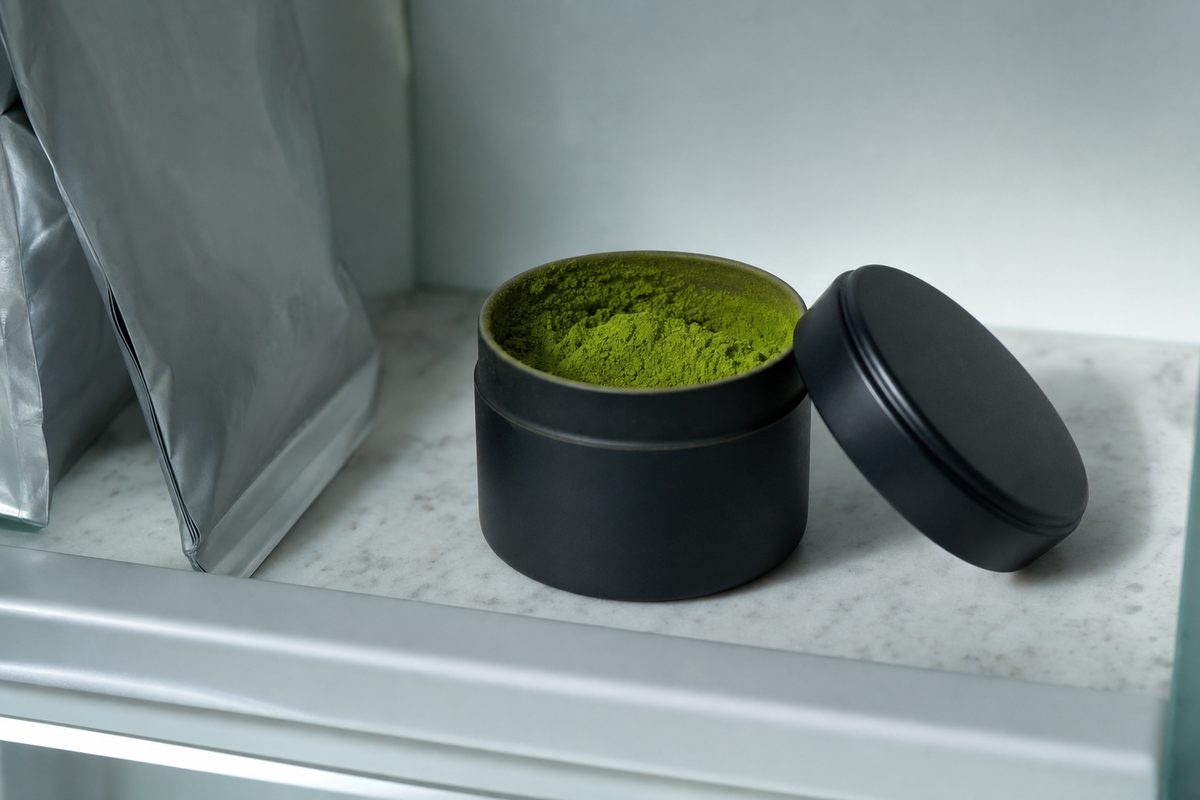
Most bad matcha wasn’t bad when it was bought.
It was fine in the shop, fine on the first day, and then it spent six weeks on a sunny shelf next to the coffee grinder, and by the time you decided you “don’t really like matcha,” you were tasting storage rather than tea.
Here’s what actually happens, and the fix — which costs nothing.
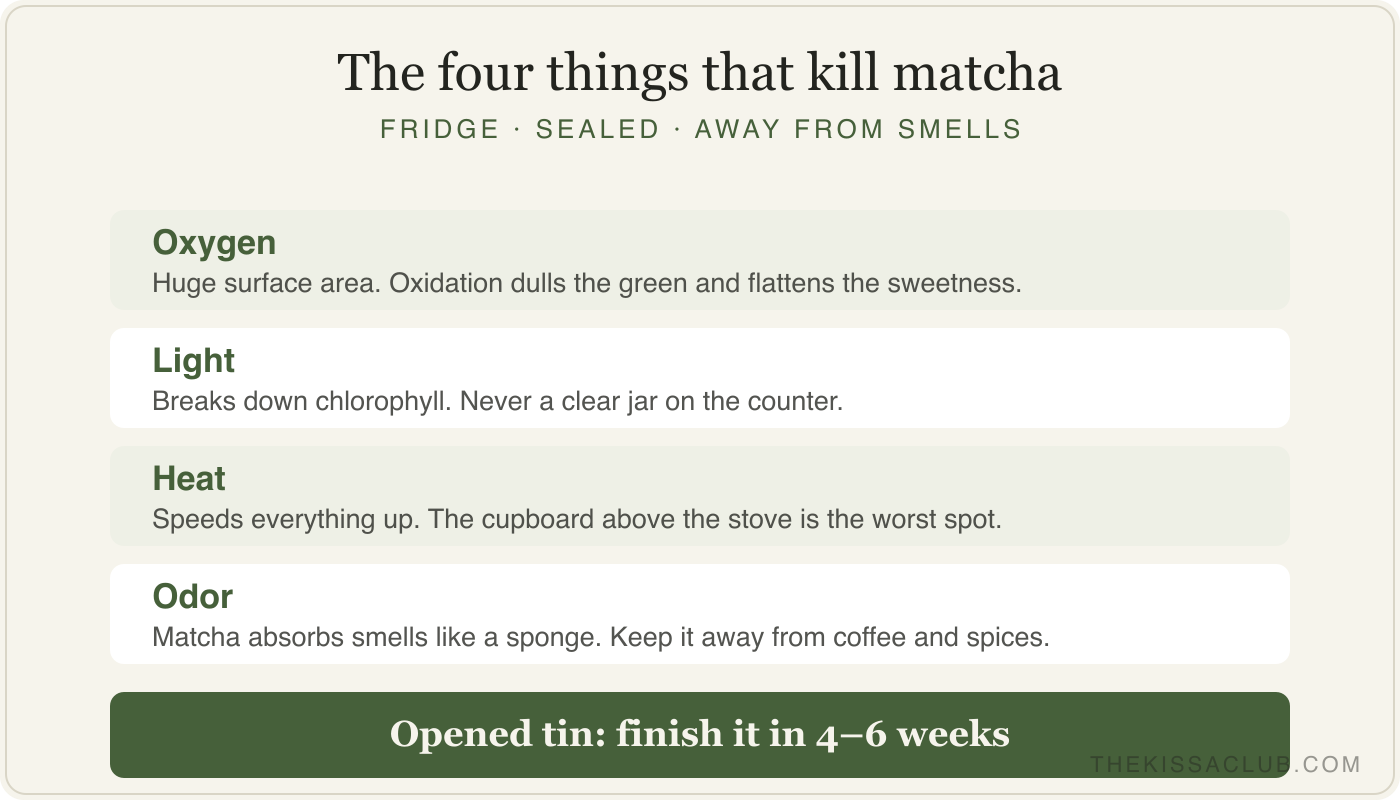
The four things that kill matcha
Oxygen. Matcha is a powder with an enormous surface area. Every gram of it is exposed. Oxidation dulls the green, flattens the sweetness and leaves that dry hay note people mistake for “the taste of matcha.”
Light. Sunlight degrades chlorophyll, which is why matcha comes in opaque tins rather than clear jars. A glass canister on the counter looks beautiful and is a slow execution.
Heat. Above about 20°C, everything above happens faster. A cupboard above the stove is the worst spot in the kitchen.
Odor. This is the one nobody expects. Matcha absorbs smells like a sponge — garlic, coffee, spices, the inside of a fridge. A tin stored next to ground coffee will start tasting faintly of coffee within weeks, and you will blame the tea.
Where it actually belongs
Unopened: the fridge or freezer. Sealed matcha keeps for months this way. Japanese tea shops do exactly this with their stock.
Opened: the fridge, tightly sealed, away from food smells. This is the part that trips people up, so read the next paragraph carefully.
Let it come to room temperature before opening the tin. Cold matcha + warm kitchen air = condensation inside the tin, and moisture in matcha means clumping and rapid spoilage. Take it out, wait fifteen minutes, then open it. If that sounds fussy, the alternative is keeping it in a cool dark cupboard, which is genuinely fine if you’ll finish it in a month.
For what it’s worth: I keep mine in the fridge in the original tin, inside a zip bag, on a shelf away from anything pungent. My wife thinks the zip bag is excessive. My wife has also never tasted garlic matcha, so the system is working.
How long it lasts
| State | Realistic window |
|---|---|
| Unopened, refrigerated | 6–12 months (use the packed-on date) |
| Unopened, cupboard | ~6 months |
| Opened | 4–6 weeks |
Four to six weeks is the number that matters, and it’s why buying small tins is the cheaper choice even though the price per gram looks worse. A 100 g bag at a bargain price is only a bargain if you drink 100 g in six weeks. Almost nobody does.
How to tell it’s gone
You don’t need a trained palate. You need eyes and one sniff.
- Color. Fresh matcha is vivid, almost electric green. Old matcha drifts toward olive, then yellow-brown. This is the fastest test and it’s reliable.
- Smell. Fresh smells sweet and grassy, a little like nori. Old smells like dry hay or an empty cardboard box.
- Taste. Flat. Not bitter — bitterness is usually a brewing problem — but hollow, with the sweetness gone and nothing behind it.
Old matcha is not dangerous. It’s just sad. Bake with it, blend it into a smoothie, put it in cookies where sugar and butter will carry it, and buy a fresh tin for drinking.
The five-second version
Fridge, sealed, away from smells. Warm it to room temperature before opening. Finish an opened tin in about a month. Buy small.
That’s it — and it’s the difference between matcha that tastes like the shop and matcha that tastes like disappointment.
What’s your storage setup — and has anything ever come out tasting like the thing next to it? Send it over; the Club collects these, and the coffee-flavored-matcha stories are always good.
— Sen
From the Kissa Club kitchen
The Home Kissa Guide
Everything on this site, organized into one book: brewing guides for matcha, sencha, hojicha & genmaicha, 40 café-style recipes, printable recipe cards, and the buying cheat sheet Japanese shoppers actually use. $19, instant download.
Get the guide →Want matcha that actually tastes like Japan?
Grab the free 5-Minute Matcha Cheat Sheet — ratios, temperatures, and the 3 mistakes to avoid, on one printable page.
Send me the cheat sheet →