Matcha Basics
Does Matcha Have More Caffeine Than Coffee? The Honest Numbers
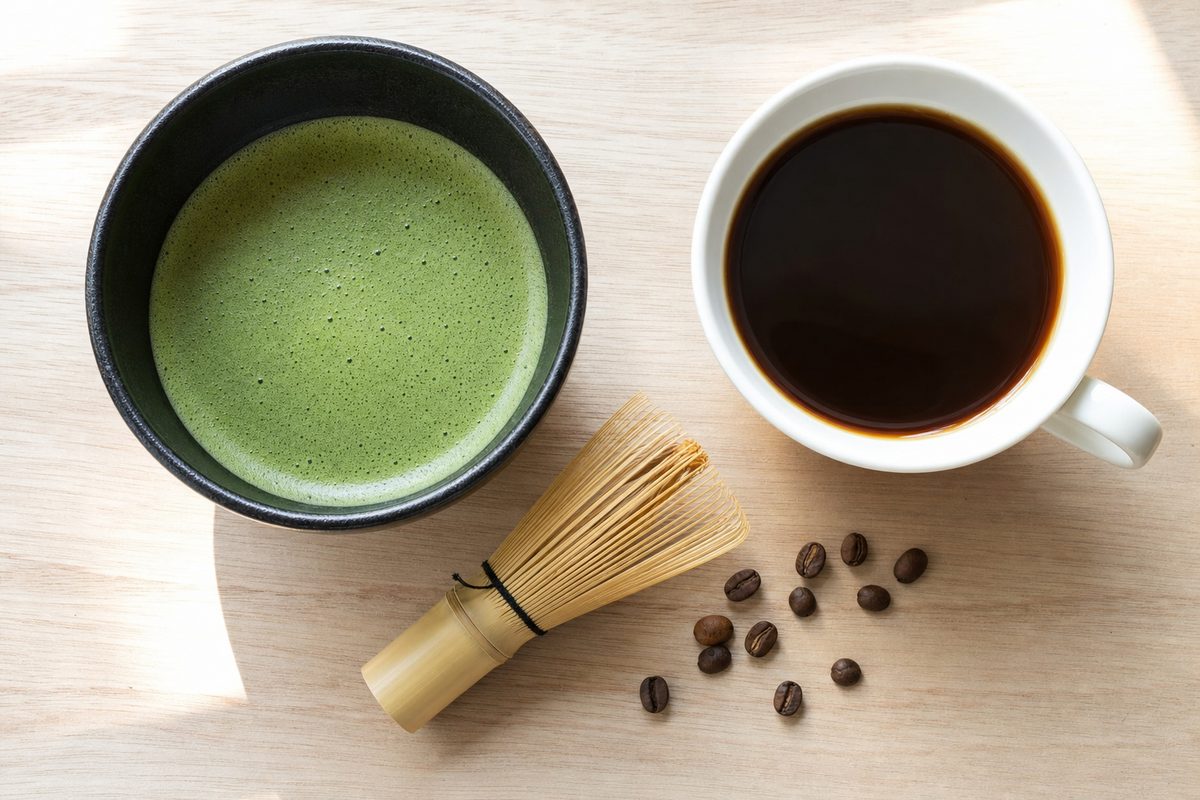
Matcha does not have more caffeine than coffee.
It has less — usually about half a cup’s worth. And yet almost everyone who switches says matcha “hits differently,” which sounds like the kind of thing people say to justify a $30 tin. It isn’t. There’s a specific, boring, chemical reason, and once you know it you can dose matcha deliberately instead of hoping.
The numbers, per actual cup
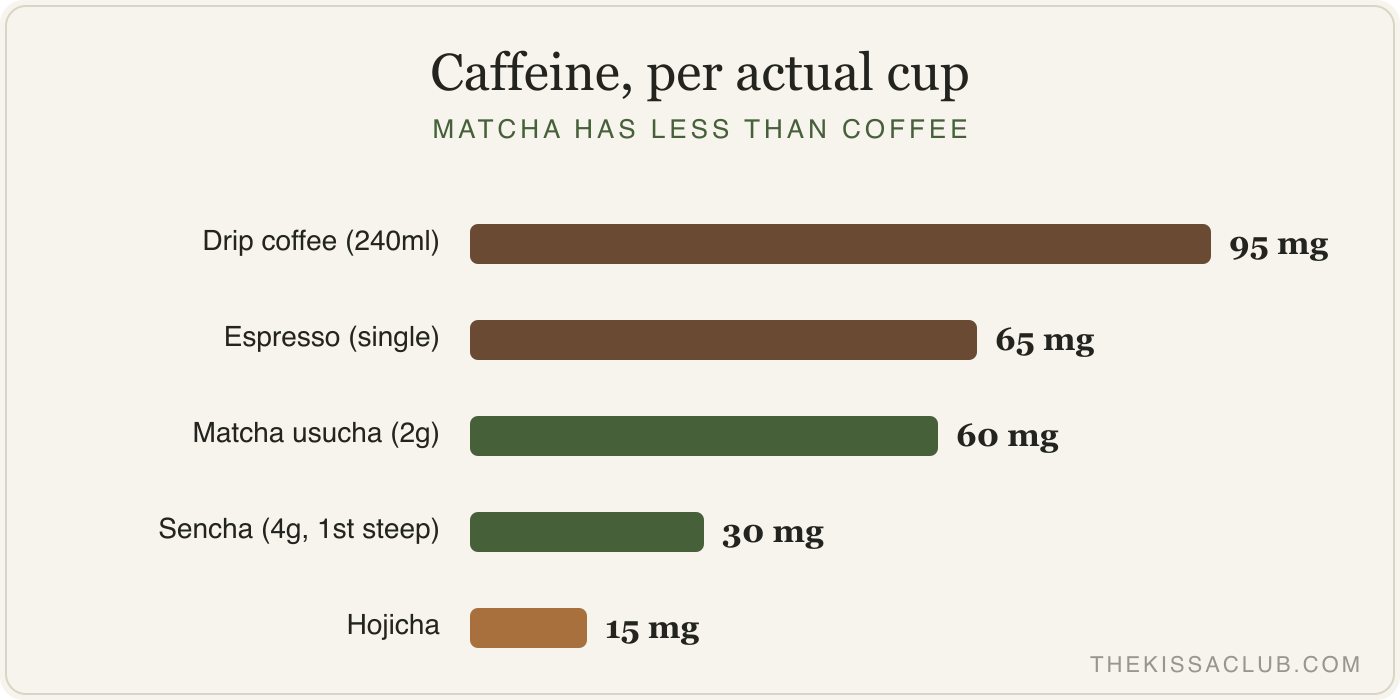
Caffeine content varies with cultivar, harvest and how strong you make it, so treat these as the honest middle of the range rather than gospel:
| Drink | Typical caffeine |
|---|---|
| Matcha, usucha (2 g powder) | ~60 mg |
| Drip coffee (240 ml) | ~95 mg |
| Espresso (single, 30 ml) | ~65 mg |
| Sencha (4 g leaf, one steep) | ~30 mg |
| Hojicha | ~10–20 mg |
Two things follow from that table.
First, a standard bowl of matcha sits between a shot of espresso and a mug of coffee. Nobody is getting wired on one cup.
Second — and this is the part people miss — matcha’s caffeine is measured per gram of powder, and you drink the whole leaf. With sencha you steep leaves and throw them away; a good chunk of the caffeine stays in the leaf. With matcha, everything in the powder ends up in you. That’s why gram for gram it looks alarming, and why per cup it doesn’t.
Why it feels different anyway
Green tea leaves — especially shade-grown ones like the tencha that becomes matcha — contain L-theanine, an amino acid that crosses into the brain and increases alpha wave activity. In plain terms: it produces alert calm.
Caffeine alone tends to arrive fast and leave badly. Caffeine plus L-theanine arrives more slowly, plateaus, and declines without the trapdoor. This isn’t folklore; it’s the most studied thing about green tea, and it’s the single reason matcha earned its reputation among people who meditate for a living.
The shading matters here. Tencha is grown under cover for the last few weeks before harvest, which raises L-theanine and lowers the bitter catechins. That’s also why good matcha tastes sweet-savory rather than sharp — the same reason it costs what it costs.
The practical version
If you’re switching from coffee: start with one bowl in the morning, in place of your first coffee, not in addition to it. The most common complaint about matcha (“it doesn’t do anything”) is usually someone who drank it after coffee and had no baseline left to notice.
If caffeine keeps you up: matcha’s is slower to clear than you’d think. My cutoff is 2 p.m., and I learned that the tedious way after a stretch of very alert 1 a.m.s.
If you want the ritual without the caffeine: switch to hojicha after dark. It’s roasted, so most of the caffeine is gone, and it’s what a lot of Japanese households actually drink in the evening — including with dinner, including for children.
If you’re pregnant or caffeine-sensitive: the usual guidance is a 200 mg daily ceiling, which is about three bowls of usucha. That’s a general figure, not medical advice — your doctor knows your situation and I don’t.
What doesn’t change the caffeine
A few things people believe that aren’t true:
- “Ceremonial grade has less caffeine.” No. Higher grades often have slightly more, because first-harvest shaded leaf is caffeine-rich. The grade names are export marketing anyway.
- “Cold water pulls less caffeine.” Not for matcha — you’re drinking the whole powder regardless of water temperature. This is true for steeped leaf tea, not for matcha.
- “Whisking longer makes it stronger.” It makes it foamier. The caffeine was already all in the bowl.
The only real lever is how much powder you use. 2 g is a standard bowl. If matcha feels like too much, make it 1.5 g before you conclude it isn’t for you.
The one-line version
Matcha: less caffeine than coffee, delivered more gently, entirely controlled by how much powder you scoop. That’s the whole thing.
Did switching from coffee change anything for you — or did you go back? I’m collecting answers over on the Club page, and the honest “I went back” replies are the ones I find most useful.
— Sen
From the Kissa Club kitchen
The Home Kissa Guide
Everything on this site, organized into one book: brewing guides for matcha, sencha, hojicha & genmaicha, 40 café-style recipes, printable recipe cards, and the buying cheat sheet Japanese shoppers actually use. $19, instant download.
Get the guide →Want matcha that actually tastes like Japan?
Grab the free 5-Minute Matcha Cheat Sheet — ratios, temperatures, and the 3 mistakes to avoid, on one printable page.
Send me the cheat sheet →