Matcha Basics
How to Make Matcha at Home (Yes, Even Without a Whisk)
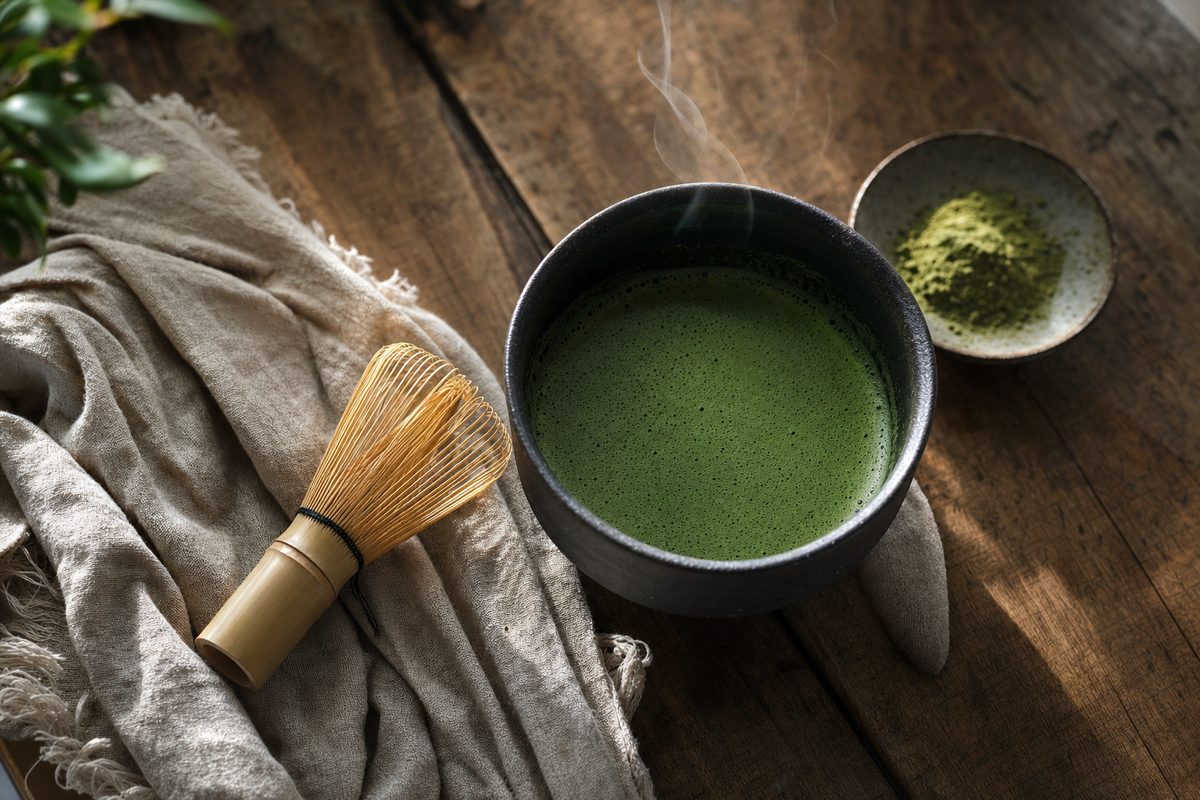
Here’s something that surprises most people: the number one reason homemade matcha tastes bitter has nothing to do with the powder you bought. It’s the water. In Japan, nobody — not tea shops, not grandmothers, not the strictest tea teachers — pours boiling water on matcha. Abroad, almost everyone does.
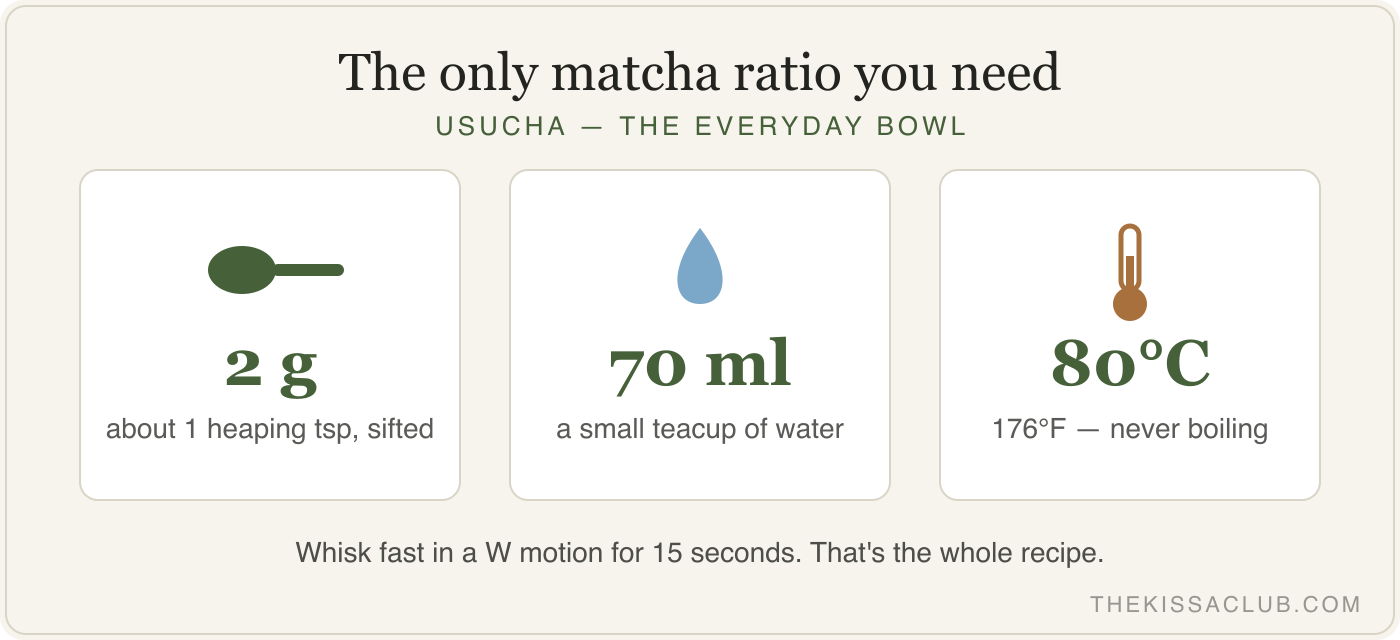
The short answer: use 2 grams of matcha (about 1 teaspoon), 70 ml of water at 80°C / 176°F, and whisk in a fast “W” motion for 15 seconds. That’s it. Everything else in this article is detail — but the details are what separate a silky bowl from a bitter, clumpy one.
Why temperature matters more than brand
Matcha is powdered whole tea leaf. Unlike coffee, you’re not filtering anything out — you drink the leaf itself. Its sweetness comes from an amino acid called L-theanine, and its bitterness from catechins. Here’s the key: catechins extract aggressively above roughly 85°C, while theanine’s sweetness comes through at lower temperatures.
Pour boiling water on even a fine ceremonial matcha, and you’ve chosen bitterness. Use 80°C water on a modest one, and it will taste smoother than an expensive tin brewed wrong.
No thermometer? Do what Japanese households do: pour boiling water into an empty cup first, wait about 60 seconds, then use it. Each transfer between vessels drops the temperature roughly 5–10°C.
What you need (and what you can skip)
The full traditional setup is a chawan (tea bowl), a chasen (bamboo whisk), and a chashaku (bamboo scoop). If you want the real experience, a basic starter set costs $25–40.
But you can start today with things you already own:
- A small bowl — wider than a mug, so you have room to whisk
- A regular teaspoon — 1 level teaspoon ≈ 2 g of matcha
- A small fine-mesh strainer — this one is non-negotiable, and we’ll get to why
Step by step (the way it’s done in Japan)
- Sift the matcha. Push 2 g of powder through a fine strainer into your bowl. Matcha clumps because of static, not quality — sifting is the single biggest upgrade to texture. Skipping this is why your matcha has lumps, full stop.
- Add a splash of cold water (about a tablespoon) and work it into a smooth paste. This “pre-mixing” step is how cafés get that lump-free finish.
- Add 70 ml of 80°C water.
- Whisk fast, in a W or M shape — not circles. Circles stir; the W aerates. Keep your wrist loose, 15 seconds, until a fine foam covers the surface.
- Drink it within a minute or two. Matcha is a suspension, not a solution — it settles. In tea rooms, a bowl is finished in three sips.
No whisk? Use a jar.
Put the sifted matcha and 70 ml of warm (not hot) water in a small jar with a tight lid, and shake hard for 15 seconds. The foam is coarser than a chasen makes, but the result beats a fork or a spoon every time. A $2 milk frother is the next step up and what many busy Japanese people use on weekday mornings.
The 3 mistakes that ruin most homemade matcha
- Boiling water. Covered above — but it’s responsible for more ruined bowls than everything else combined.
- Not sifting. Clumps on the surface, bitter pockets in the sip.
- Culinary-grade matcha drunk straight. Culinary matcha is made to fight through milk and sugar — it’s intentionally robust and astringent. Drunk with just water, it tastes harsh. That’s not a defect; you’re using a baking ingredient as a beverage. For drinking straight, you want ceremonial grade — our full guide to the difference is here: ceremonial vs culinary matcha.
A quieter way to start the day
There’s a reason the tea ceremony survived 450 years, and it isn’t caffeine. Making matcha forces you to slow down for exactly four minutes — sift, pour, whisk, sit. No screen fits in that ritual.
Get the ratio and temperature right, and tomorrow morning your kitchen will smell like a tea room in Uji. From there, it’s a short slide into iced lattes iced matcha latte recipe, and there is no way back. Welcome to the club.
From the Kissa Club kitchen
The Home Kissa Guide
Everything on this site, organized into one book: brewing guides for matcha, sencha, hojicha & genmaicha, 40 café-style recipes, printable recipe cards, and the buying cheat sheet Japanese shoppers actually use. $19, instant download.
Get the guide →Want matcha that actually tastes like Japan?
Grab the free 5-Minute Matcha Cheat Sheet — ratios, temperatures, and the 3 mistakes to avoid, on one printable page.
Send me the cheat sheet →