Recipes
Iced Matcha Latte Recipe: Café Quality in 5 Minutes
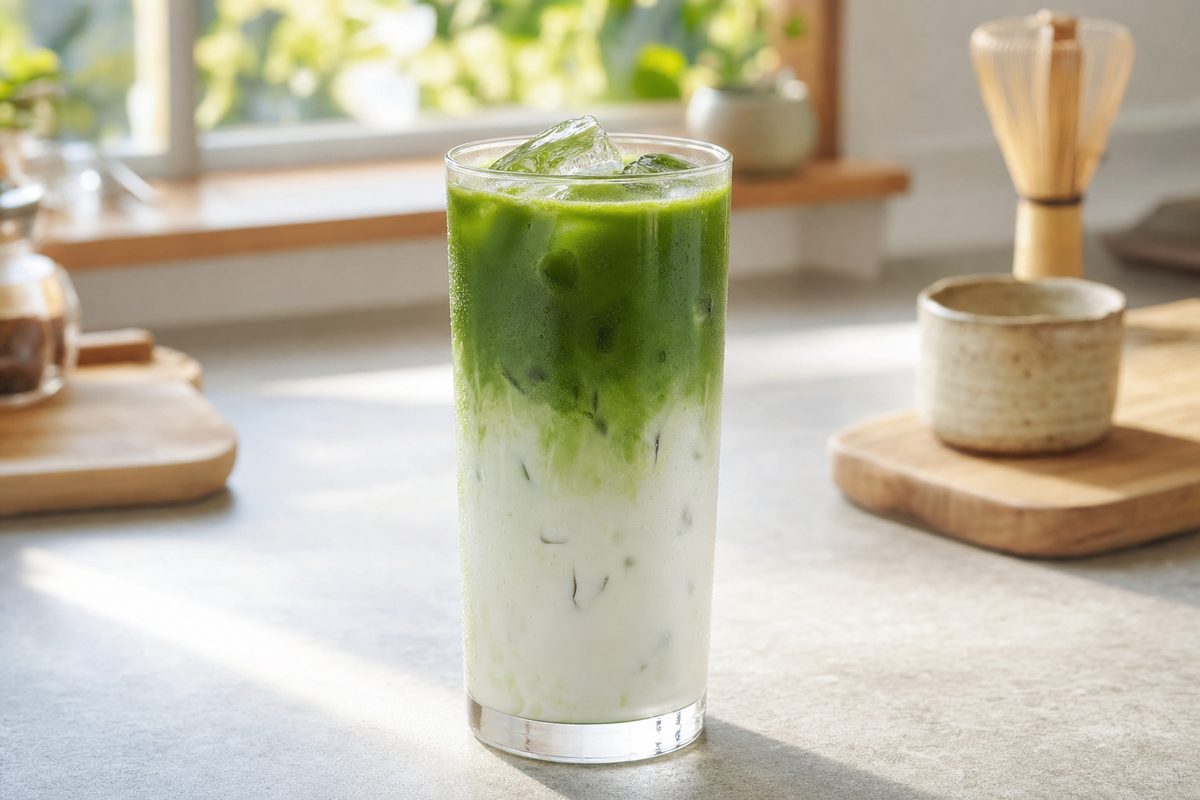
That $7 iced matcha latte you’re buying? It contains roughly 40 cents of matcha, ice, and milk. The café isn’t charging you for ingredients — it’s charging you for knowing the ratio. Today the ratio is yours.
The short answer: 2 g matcha + 30 ml warm water, whisked or shaken smooth, poured over 150 ml of cold milk and a full glass of ice. Sweetener optional. Matcha goes on top if you want the layered look. Five minutes, and honestly, closer to three once you’ve done it twice.
Why cafés’ lattes are smooth and yours might not be
Two reasons, and neither is your matcha brand.
First: matcha doesn’t dissolve. It’s ground leaf held in suspension. If you stir powder directly into cold milk, it clumps — cold liquid plus fat is the worst possible environment for dispersing a fine powder. Every café makes a small concentrate with warm water first, then combines. That one step is 90% of the game.
Second: milk hides delicacy, not bitterness. A latte doesn’t need expensive drinking-grade matcha, but it does punish harsh, stale powder. A decent culinary or “latte grade” matcha is genuinely the right tool here — smoother than bargain powder, and you’re not wasting first-flush subtlety that milk would erase anyway. (Confused about grades? See ceremonial vs culinary matcha.)
Ingredients (one tall glass)
- 2 g matcha (1 level teaspoon)
- 30 ml warm water — about 80°C / 176°F, not boiling
- 150 ml cold milk — whole milk for classic, oat milk for the best foam among plant milks
- Ice, a full glass, not three sad cubes
- Optional: 1–2 teaspoons maple syrup, honey, or simple syrup
Method
- Sift the matcha into a small bowl or jar. Thirty seconds, and it’s the difference between silk and specks.
- Add the warm water and whisk in a fast W-motion — or seal the jar and shake hard for 15 seconds. You want a smooth, foamy concentrate with no visible powder.
- Sweeten the concentrate, not the finished drink. Syrup blends into warm liquid; it sinks straight past cold milk.
- Fill the glass with ice, pour in the cold milk, leaving a couple of centimeters of headroom.
- Pour the matcha concentrate slowly over the back of a spoon onto the milk. It floats into that green-on-white gradient — the entire reason this drink owns Pinterest. Stir before drinking.
The one-jar weekday version
No layers, no ceremony: sifted matcha, splash of warm water, shake; add milk and ice to the same jar; shake again; drink from the jar. Sixty seconds. This is how it actually gets made on a Tuesday.
Three mistakes to avoid
- Powder straight into cold milk. Clumps, always. Concentrate first.
- Boiling water for the concentrate. Even in a latte, scorched matcha reads as bitterness. 80°C.
- Old matcha. An opened tin past two months has lost its top notes — that dull, hay-like flavor isn’t “how matcha tastes,” it’s how expired matcha tastes. Buy 30g tins and finish them.
Worth 40 cents of your morning
Make this three times and the motions become automatic — sift, shake, pour, watch the green sink into the white. It’s a small, good-looking ritual, it costs a tenth of the café version, and it tastes like you know what you’re doing. Because now you do.
Next up: the hot version done properly how to make matcha at home — where technique matters even more, and where good matcha finally gets to show off.
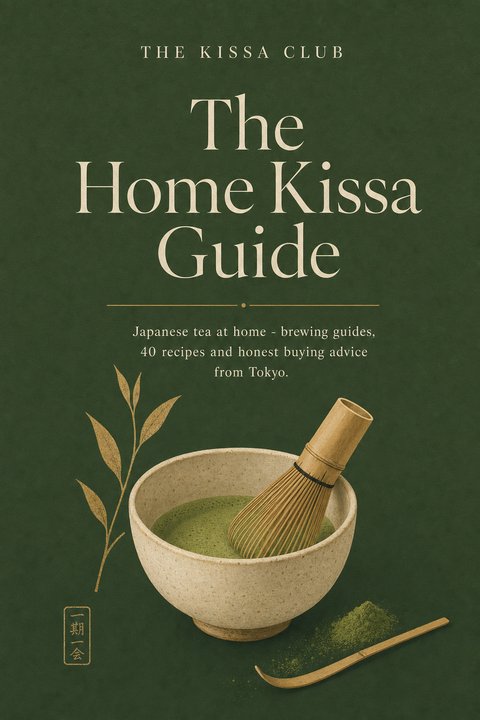
From the Kissa Club kitchen
The Home Kissa Guide
Everything on this site, organized into one book: brewing guides for matcha, sencha, hojicha & genmaicha, 40 café-style recipes, printable recipe cards, and the buying cheat sheet Japanese shoppers actually use. $19, instant download.
Get the guide →Want matcha that actually tastes like Japan?
Grab the free 5-Minute Matcha Cheat Sheet — ratios, temperatures, and the 3 mistakes to avoid, on one printable page.
Send me the cheat sheet →