Japanese Tea
Why Green Tea Upsets Your Stomach (It's Not You)
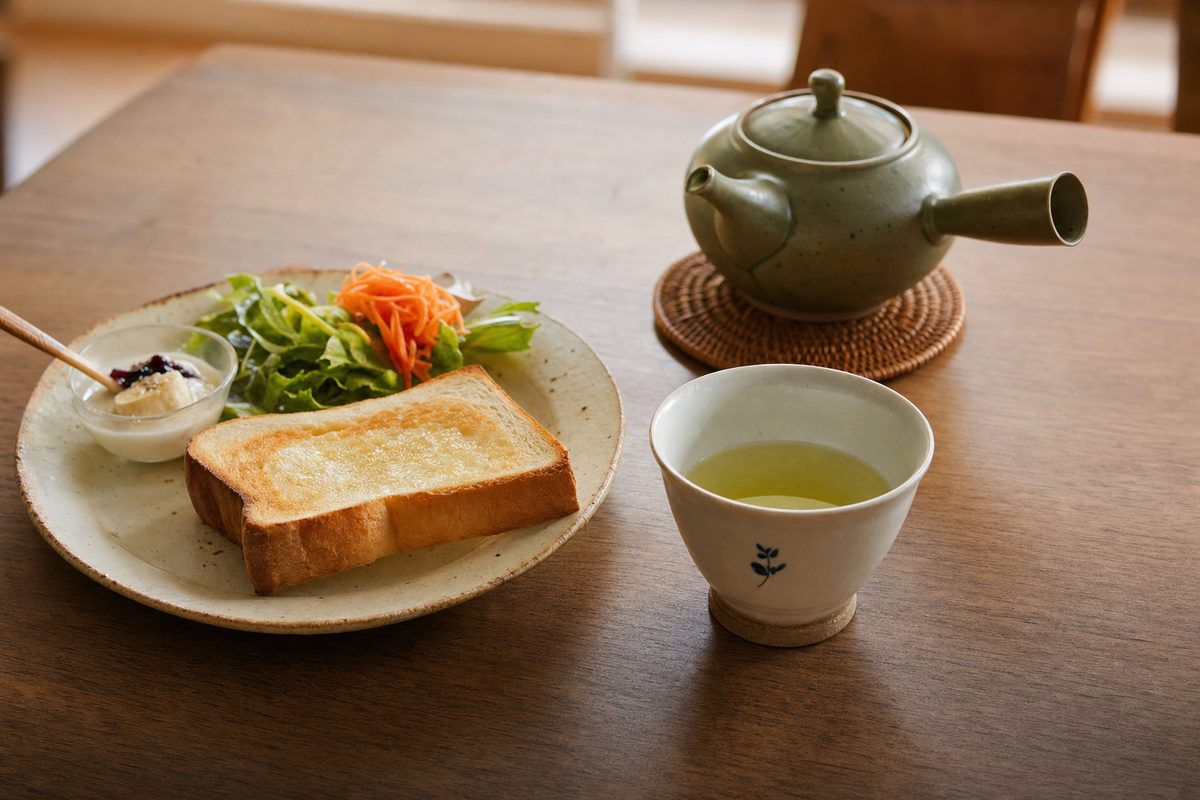
For a while I thought I had simply developed a problem with green tea.
I’d buy the cheap bags of sencha from the supermarket — the big ones, the ones that feel like a sensible purchase — brew a pot in the morning, and spend the next hour with a stomach that had clearly decided against me. Cramping, loose bowels, the works. It happened often enough that I started treating tea as something my body had grown out of.
It wasn’t the tea. It was three things I was doing to it, all of which are fixable, and one of which explains why the expensive tin at the tea shop never did this to me.
What’s actually happening
Tea contains tannins — a group of polyphenols that includes the catechins everyone likes to talk about for their antioxidant properties. Tannins are also astringent: they bind to proteins, and in your stomach they can increase acid production and irritate the lining.
On a full stomach, this is a non-event. The tannins bind to food and pass through.
On an empty stomach, there is nothing for them to bind to except you. That’s when people get the nausea, the cramping, and — if things are moving quickly — the trip to the bathroom. This is well documented for tea and coffee alike, and it has nothing to do with sensitivity or weakness. It’s chemistry meeting an empty gut.
Why the cheap supermarket bags made it worse
Here’s the part that took me embarrassingly long to work out, and it isn’t simply “cheap tea is bad for you.” Three things stack up:
1. Lower grades are more tannic to begin with. The best Japanese teas are shaded for the last few weeks before harvest. Blocking sunlight raises L-theanine (the amino acid responsible for that sweet, savory, brothy taste) and suppresses catechin development. Unshaded, later-harvest leaf — the kind that ends up in the big cheap bags — has the opposite balance: less theanine, more catechin. More astringency per cup, before you’ve done anything.
2. We brew cheap tea harder. Nobody carefully measures 70°C water for a supermarket teabag. You pour boiling water on it and leave it while you do something else. Hot water and long steeping both extract more tannin. I was taking the more tannic leaf and then treating it in the way that extracts the most tannin.
3. We drink more of it, faster. A ¥300 bag encourages a big mug, gulped. A tin that cost ¥2,000 encourages a small cup, sipped. Same compound, very different dose.
So it wasn’t price. It was grade, temperature and quantity — and price happened to correlate with all three.
That’s also why good tea genuinely feels different in the body, not just on the tongue. It isn’t magic or purity. It’s a leaf with a different chemical balance, brewed cooler, in smaller amounts.
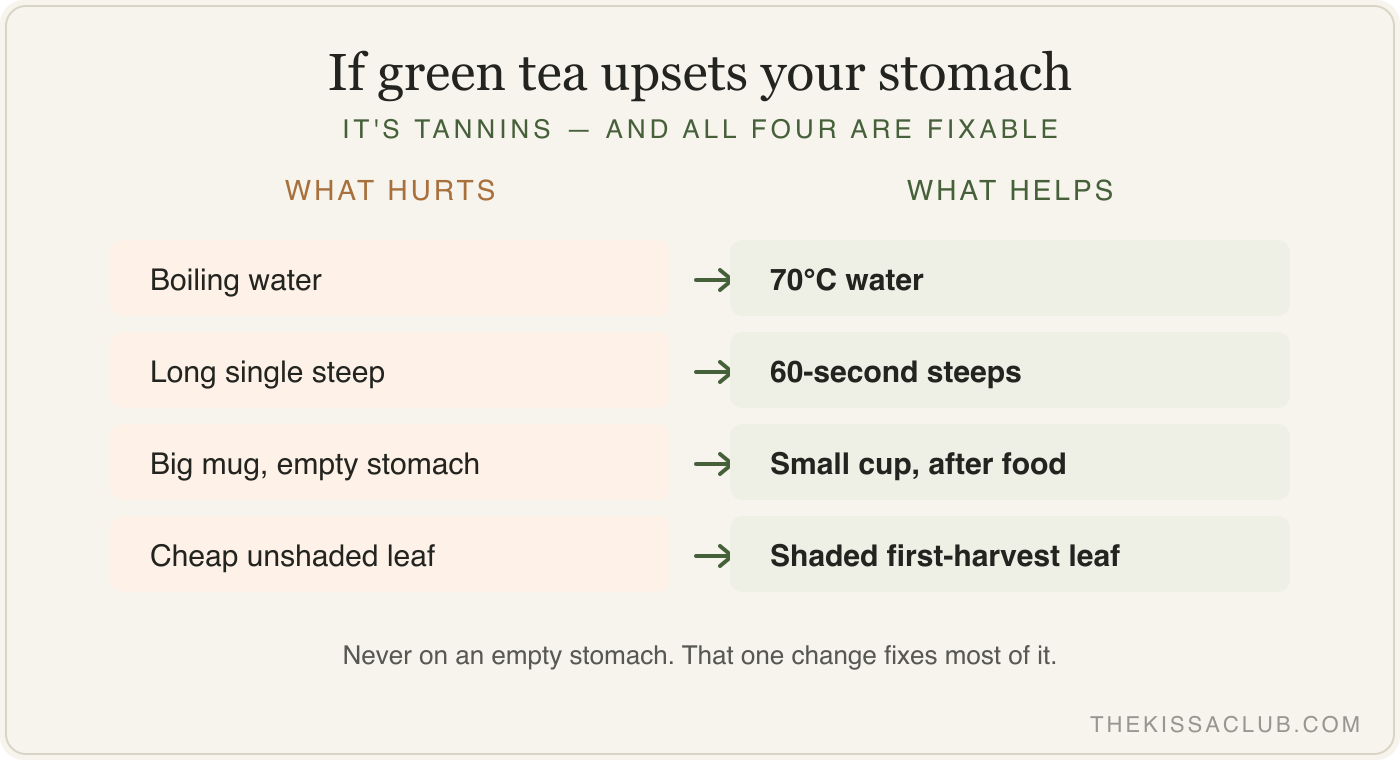
The four changes that fixed it
Never on an empty stomach. This alone solved most of it for me. Tea after breakfast, not instead of it. If you want something first thing, have water, then tea twenty minutes into your meal.
Drop the water temperature. For sencha, 70°C is the target, not boiling. Cooler water pulls the sweetness and leaves much of the astringency in the leaf. If you have no thermometer: boil, pour into an empty cup, wait a minute, then pour onto the leaf.
Shorten the steep. 60 seconds for the first infusion. Japanese tea is designed for multiple short steeps, not one long one — that’s what the small pot is for.
Switch teas after dark, or when your stomach is unhappy. Hojicha is roasted, which destroys much of the catechin content along with most of the caffeine. It’s what a lot of Japanese households drink in the evening and give to children, and it’s the gentlest thing in the cupboard. Genmaicha (with roasted rice) is similarly forgiving because the rice dilutes the leaf.
Where the money actually helps
I’m not going to tell you that expensive tea is a health product. It isn’t, and anyone selling it that way is selling you something else.
But if your stomach reacts to green tea, upgrading is a reasonable experiment for a boring reason: a shaded, first-harvest leaf gives you more sweetness for less astringency, and it comes with instructions that push you toward cooler water and smaller cups. You end up drinking better tea in a gentler way, and both halves of that matter.
Start with a small tin from a mill that names its region and harvest — the shortlist is here. Small, because opened tea goes flat fast, and because the point is to test whether your body agrees, not to commit.
One honest caveat
I’m a person in Tokyo who drinks a lot of tea, not a doctor. Occasional stomach upset from tea on an empty stomach is ordinary. Persistent pain, or symptoms that show up regardless of what you eat and drink, is a conversation for an actual physician — please don’t let a tea blog talk you out of that.
Has tea ever turned on you like this — and did changing the temperature fix it, or did you have to change the tea? The Club page is where these end up, and this is the question I get asked most quietly.
— Sen
From the Kissa Club kitchen
The Home Kissa Guide
Everything on this site, organized into one book: brewing guides for matcha, sencha, hojicha & genmaicha, 40 café-style recipes, printable recipe cards, and the buying cheat sheet Japanese shoppers actually use. $19, instant download.
Get the guide →Want matcha that actually tastes like Japan?
Grab the free 5-Minute Matcha Cheat Sheet — ratios, temperatures, and the 3 mistakes to avoid, on one printable page.
Send me the cheat sheet →